Allegheny chinquapin
Castanea pumila Beech family
The American chestnut's small cousin was once common in Alabama woods and is now scarce. Each spiny bur holds one sweet nut, and the plant starts bearing in three or four years.
Draft. This guide was checked against Extension, USDA and poison-control sources in November 2026. It has not yet been reviewed by a botanist or, where it touches the law, an attorney, and it is hidden from search engines until it is.

Know it
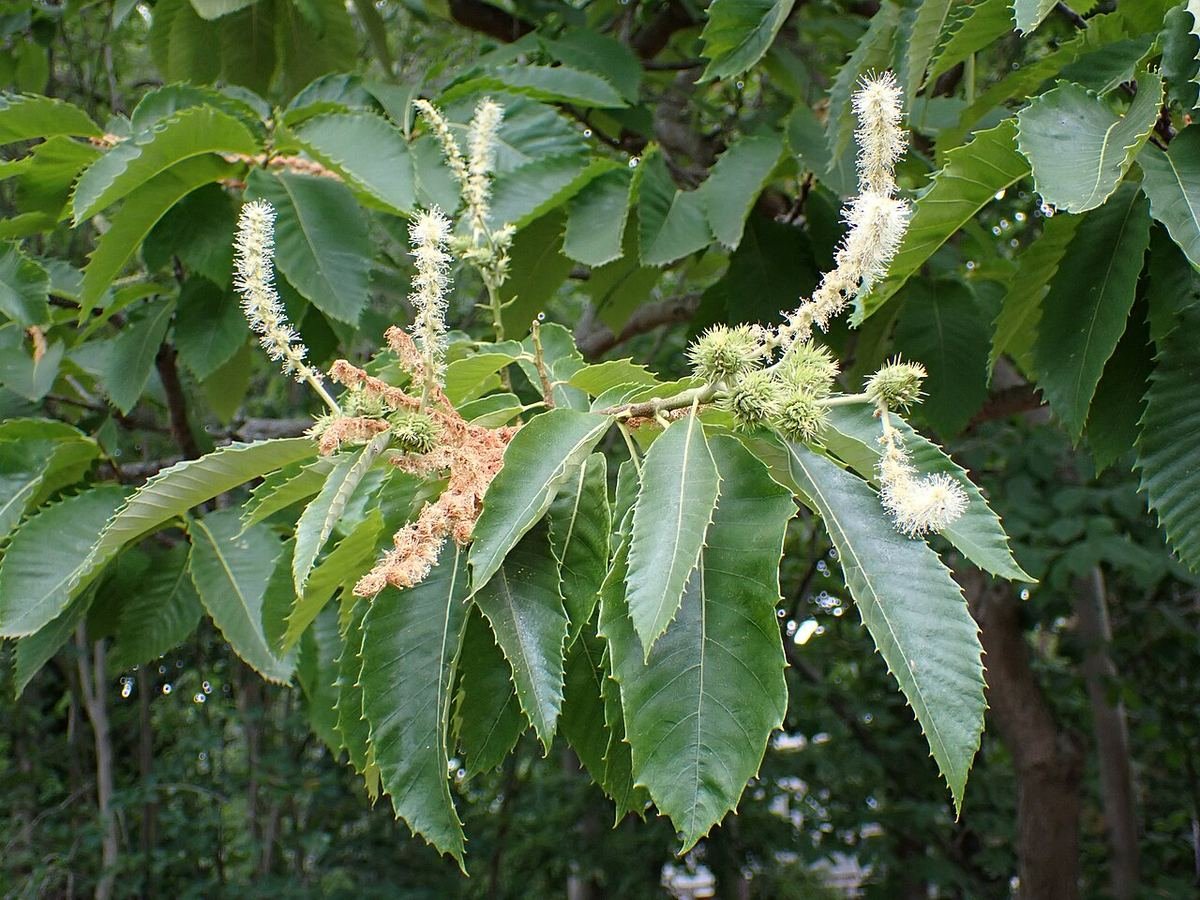
Narrow leaves with coarse, bristle-tipped teeth, green above and pale and felted beneath. Long cream-coloured catkins with a heavy, musky smell appear in late spring. The bur is a ball of needle-sharp spines about an inch across. It splits in early autumn to show a single dark, shiny, pointed nut.
A dangerous lookalike
Buckeye seeds are also brown, shiny and nut-like, and red buckeye grows all over Alabama. Buckeyes are poisonous. The difference is in the leaf, the husk and the nut. A buckeye leaf is a hand of five to seven leaflets. A chinquapin leaf is single. A buckeye husk is smooth, or at most warty with a few short prickles, and holds one to three large round seeds, each with a pale scar. A chinquapin bur is a dense ball of needle-sharp spines holding one small, pointed nut. If the leaf is a hand of leaflets, do not eat the nut.
Where it grows
Chinquapin wants the conditions most fruit trees hate: poor, dry, acid soil in the open. Good drainage is essential. A root rot that lives in wet soil kills it quickly.
It is susceptible to the chestnut blight that destroyed the American chestnut, and how well a plant resists it varies. Many lose their stems, and the plant resprouts from the base and fruits again within a few years.
Pollination
One plant alone sets empty burs. Plant at least two grown from different seed, within 50 feet of each other. The catkins are visited by beetles, flies and bees, and the pollen also travels on the wind.
Propagation
- Seed is the only practical method. The nuts must never dry out and cannot be stored for long. Collect them the day the burs open and sow them at once, an inch deep, under wire mesh. The root emerges in autumn and the shoot follows in spring.
- If you must hold them, keep them in barely damp peat in the fridge and sow by early spring.
What you can and cannot eat
Edible
- The nuts, raw, roasted or boiled. They are sweeter than a chestnut and about the size of an acorn.
Do not eat
- Burs. Handle them with leather gloves.
- Wormy nuts. Weevil grubs hatch inside. To stop them, soak fresh nuts in water held at 120°F for 20 minutes, then dry and refrigerate.
- Anyone with a tree nut allergy should be cautious.
Be certain of the plant before you eat any part of it. One web page is not enough. If you are in doubt, leave it.
Using the harvest
Check the plants daily once burs begin to split, because squirrels, jays and deer take the nuts within hours. Chinquapins are starchy, like chestnuts, and spoil if they are left at room temperature. Keep them in the fridge in a vented bag and eat them within a few weeks, or shell and freeze them.
Roast them in a dry pan after cutting a slit in each shell so they do not burst.
Law and permission
Chinquapin is uncommon enough that every wild stand matters. Take nuts only with the landowner's permission, and leave some on the ground. Do not dig wild plants. They rarely survive it, and removing plants from public land is illegal in Alabama's state parks and wildlife management areas.
Check it against
- Alabama Plant Atlas, for where the species is recorded in the state
- USDA PLANTS Database, for native status and range
- Alabama Cooperative Extension System, for growing advice written for Alabama soils