American persimmon
Diospyros virginiana Ebony family
A tough, drought-proof tree that drops sweet orange fruit in autumn, long after everything else has finished. Only the female trees fruit, and only ripe fruit is worth eating.
Draft. This guide was checked against Extension, USDA and poison-control sources in November 2026. It has not yet been reviewed by a botanist or, where it touches the law, an attorney, and it is hidden from search engines until it is.

Know it
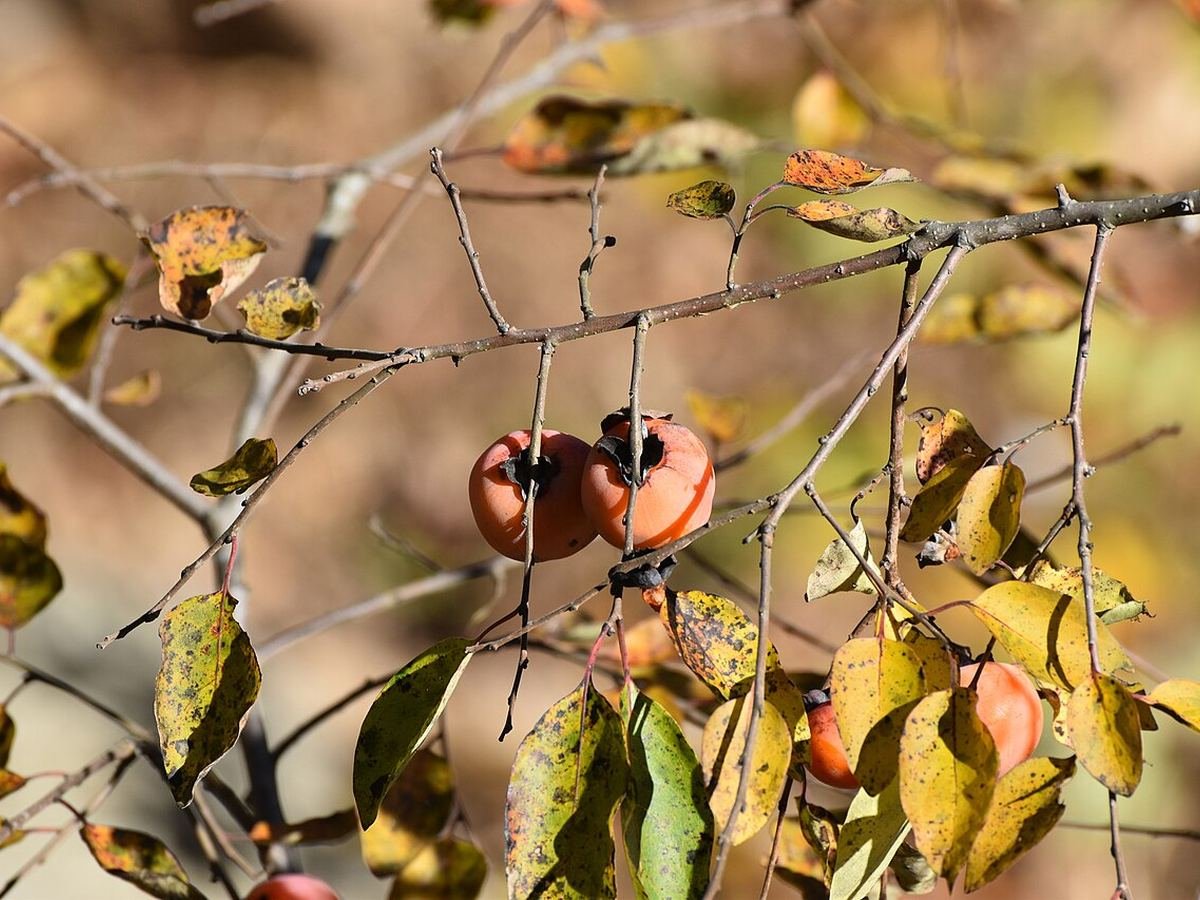
The bark is the giveaway. On a mature tree it is nearly black and cut into thick square blocks, like the hide of an alligator. Leaves are simple, oval, glossy above and pale beneath. The fruit is round, one to two inches across, orange with a dusty bloom, and carries a four-pointed woody cap.
Where it grows
Persimmon is one of the first trees to move into an abandoned field. It handles drought, poor soil, heat and brief flooding, which makes it one of the best fruit trees for a neglected lot. It grows a deep taproot early, so plant it young and leave it where it is.
Pollination
Trees are usually male or female. Small bell-shaped flowers open in mid to late spring and bees move pollen from the male trees to the female ones.
- A lone female may set little fruit, or seedless fruit.
- One male tree can pollinate many females, so a single male nearby is enough. Or plant in a neighbourhood where wild persimmons already grow.
- You cannot tell the sex of a seedling until it flowers, which takes four to eight years. Grafted trees of known sex remove the guesswork.
Propagation
- Seed. Clean the seeds from ripe fruit and store them in damp sand in the fridge for 60 to 90 days. Sow in spring in deep pots.
- Grafting. Graft wood from a good female tree onto a seedling in spring. This is the only way to be sure of what you get.
- Root suckers. The tree throws them freely, especially after root damage. Small ones can be moved in winter with care, but the deep taproot means they often fail.
What you can and cannot eat
Edible
- Fully ripe fruit. Ripe means soft, wrinkled and ready to fall apart in your hand. Frost has nothing to do with it. Many trees ripen in September.
- Dried fruit and frozen pulp.
Do not eat
- Unripe fruit. The tannins dry your mouth so badly you will not need a second warning. Eaten in quantity, unripe persimmons can form a hard mass in the stomach that needs medical treatment. Even ripe persimmons are best eaten in modest amounts and not on an empty stomach. People who have had stomach surgery or have slow digestion are most at risk.
- Seeds. Not eaten. Spit them out. Each fruit has several.
Be certain of the plant before you eat any part of it. One web page is not enough. If you are in doubt, leave it.
Using the harvest
The best fruit is on the ground. Spread a tarp or sheet under the tree and gather every day or two. Push the fruit through a food mill to separate pulp from seeds and skin, then freeze the pulp in two-cup bags. It goes into persimmon pudding, bread, cookies and fruit leather, and it keeps a year frozen.
The wood is a true ebony relative. It is extremely hard and was the standard for golf club heads and weaving shuttles. Deer, foxes and opossums eat the fruit, so a persimmon also feeds the animals that pass through a city lot at night.
Law and permission
Persimmons growing in a fence row belong to the owner of the land the trunk stands on. Fruit that has dropped onto a public sidewalk is a grey area in practice, but the tree is still not yours to shake. Ask first.
Check it against
- Alabama Plant Atlas, for where the species is recorded in the state
- USDA PLANTS Database, for native status and range
- Alabama Cooperative Extension System, for growing advice written for Alabama soils