American beautyberry
Callicarpa americana Mint family
Bright magenta berries wrapped around the stems in autumn make this the easiest native shrub to recognise. They make a good jelly, and the leaves have a long history as a mosquito repellent.
Draft. This guide was checked against Extension, USDA and poison-control sources in November 2026. It has not yet been reviewed by a botanist or, where it touches the law, an attorney, and it is hidden from search engines until it is.

Know it
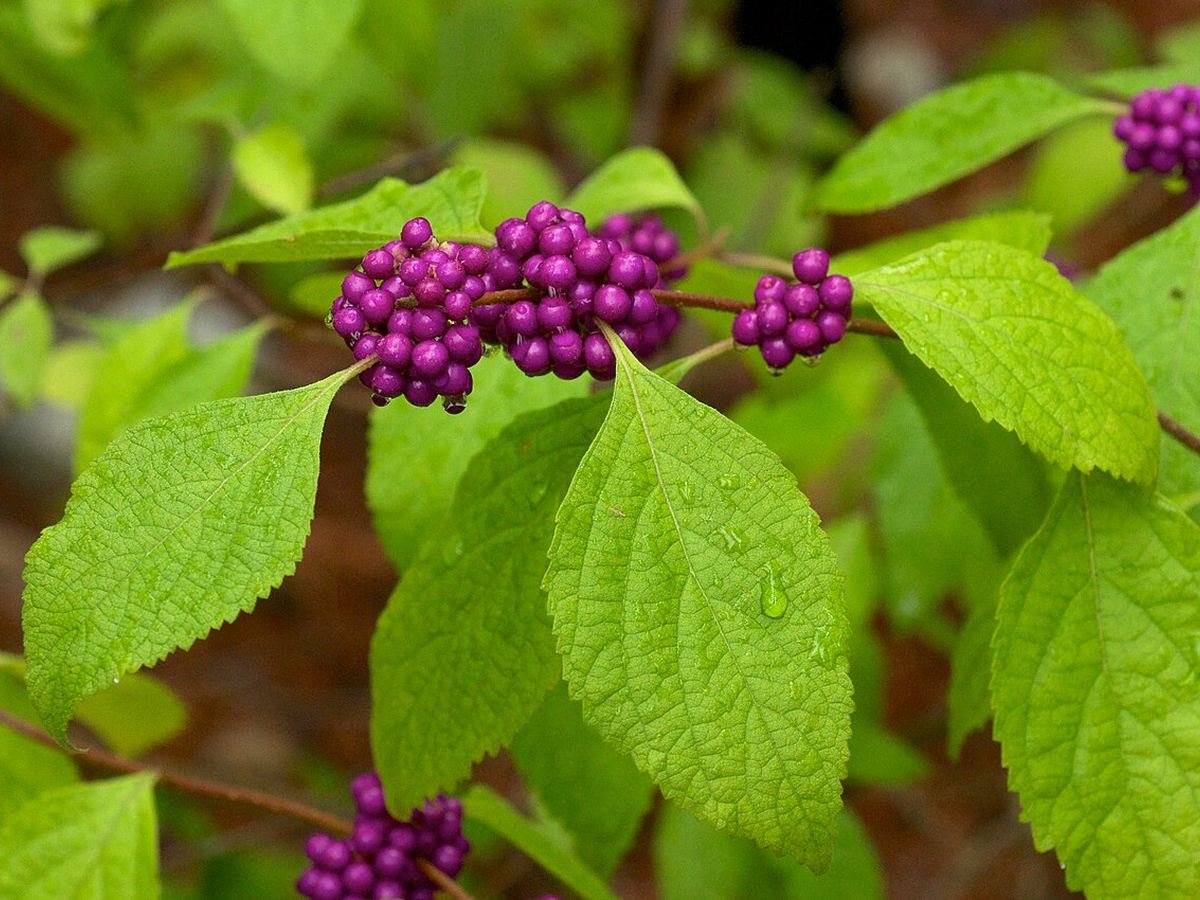
Large, pointed, toothed leaves in opposite pairs, soft and slightly fuzzy, with a sharp green smell when crushed. Small pink flowers sit in the joints where leaves meet the stem. In September the berries colour: tight collars of shiny violet-magenta fruit clasping the stem at every leaf pair.
Imported Asian beautyberries are sold in garden centres. Their berry clusters hang on short stalks away from the stem. The native one holds its berries tight against it.
Where it grows
Beautyberry is an understory shrub of pine and oak woods and takes whatever it is given. It copes with dry part shade under open trees, but fruits best with several hours of sun and will not do well in deep shade. Birds eat the berries in late autumn after other food runs out, and deer browse the leaves.
It flowers on new growth. Cut the whole shrub back to a foot tall in late winter and it will return bushier and carry more fruit.
Pollination
Small bees work the flowers through the summer. A single shrub usually fruits.
Propagation
- Seed. Mash ripe berries, rinse the seed clean and sow in autumn or spring. No special treatment is needed. Seedlings appear on their own under established plants and can be moved.
- Softwood cuttings taken in early summer root within a few weeks.
What you can and cannot eat
Edible
- Berries, in small amounts raw. They are mealy and faintly spicy.
- Berries cooked into jelly, which is how nearly everyone uses them.
Do not eat
- A large helping of raw berries. It can cause stomach upset.
- Leaves and roots. They are not food.
Be certain of the plant before you eat any part of it. One web page is not enough. If you are in doubt, leave it.
Using the harvest
Strip the berry clusters into a bucket by running your hand down the stem. For jelly, cover six cups of berries with eight cups of water, boil for 20 minutes and strain. The juice looks muddy but turns a clear rose pink when sugar and pectin are added. The taste is mild and floral, something like elderflower.
The leaves
Southern farmers tucked crushed beautyberry leaves under the harness of mules and horses to keep biting flies off. In 2006, USDA researchers in Mississippi reported compounds from the leaves that repelled mosquitoes in the laboratory. Later tests by the same group added ticks (2007) and fire ants (2008). Crushing a few fresh leaves and rubbing them on your arms is the folk method. Test a small patch of skin first. The leaves themselves have never been tested for safety or effectiveness on people, so do not rely on them where ticks or mosquito-borne disease are a concern.
Law and permission
You may rub leaves on your own skin. You may not sell a beautyberry spray, salve or bundle of leaves as an insect repellent. Federal law requires anything sold to repel pests to be registered with the EPA or to meet a narrow exemption that beautyberry does not fall under. Sell the jelly and give the folklore away.
Check it against
- Alabama Plant Atlas, for where the species is recorded in the state
- USDA PLANTS Database, for native status and range
- Alabama Cooperative Extension System, for growing advice written for Alabama soils