Common elderberry
Sambucus canadensis Viburnum family (formerly Moschatel family)
A fast shrub of ditches and wet corners that gives two harvests, flowers in May and berries in July. The berries must be cooked, and every other part of the plant stays out of the pot.
Draft. This guide was checked against Extension, USDA and poison-control sources in November 2026. It has not yet been reviewed by a botanist or, where it touches the law, an attorney, and it is hidden from search engines until it is.

Know it
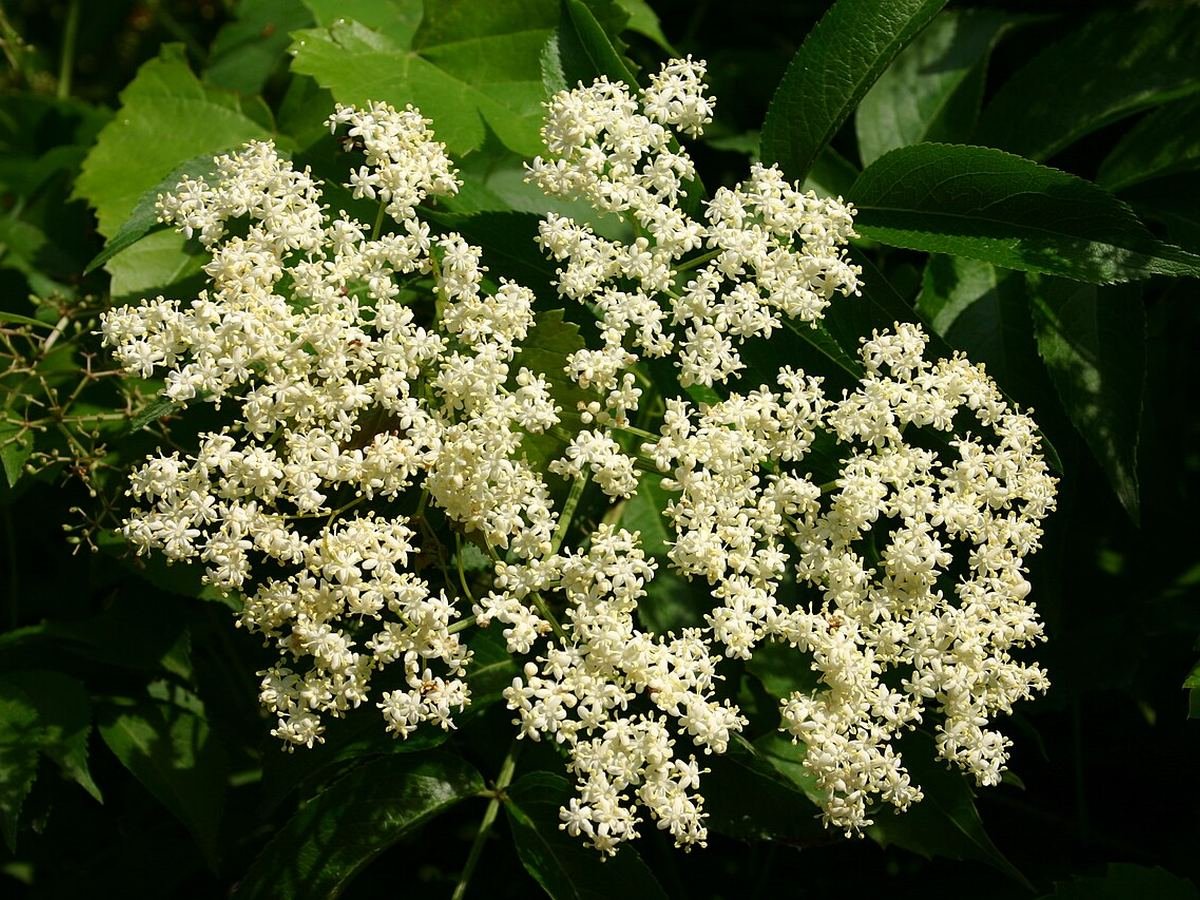
Elderberry is a woody shrub with soft, pithy stems dotted with raised pores. Leaves grow in opposite pairs, each with five to eleven toothed leaflets. The flowers are tiny, cream-white, and packed into flat-topped heads as wide as a dinner plate. The berries are small, purple-black, and hang in heavy, drooping clusters.
Three plants not to confuse it with
- Water hemlock (Cicuta maculata) is the most poisonous plant in North America and grows in the same wet ditches. It has white flower heads too, but it is not woody. Its stems are smooth, hollow and streaked with purple, its flowers form separate umbrella-shaped puffs, and it never makes berries. Elderberry leaves sit in opposite pairs on a woody, barked stem.
- Pokeweed has berries in a long hanging spike on bright magenta stems, and simple leaves.
- Devil's walking stick (Aralia spinosa) has similar clusters of black berries in late summer. Its trunk is ringed with sharp spines. Elderberry has no thorns at all. Its berries are not edible.
Where it grows
Give elderberry the damp spot where other fruit sulks. It grows six feet in a season, can fruit lightly in its second or third year, and spreads by suckers into a clump. Cut out canes older than three years each winter to keep it productive.
Pollination
Many small insects visit the flowers and the wind helps. A single plant gives a thin crop. Two plants of different origin, or two named varieties, set heavy clusters.
Propagation
- Hardwood cuttings root readily if kept moist. In late winter, cut pencil-thick stems into lengths with two pairs of buds, push them two thirds deep into moist soil or a pot, and keep them watered. Most will root by early summer.
- Suckers can be dug and moved in winter.
What you can and cannot eat
Edible
- Flowers. Shake off insects and snip the flowers off the thick green stalks first. The stalks are stem, and stem is not edible. Use the flowers fresh in fritters, cordial or tea.
- Ripe berries, cooked. Cooking breaks down most of the compounds that cause trouble. Syrup, jelly and pie are all cooked. If you make wine or any other uncooked product, heat the juice first. Strain out the seeds, and do not blend or crush them into raw juice.
Do not eat
- Raw berries. They cause nausea, vomiting and diarrhoea in many people.
- Green, unripe berries, cooked or not.
- Stems, leaves, bark and roots. These contain compounds that release cyanide. In a 1983 California case reported by the CDC, eleven people became ill within minutes and eight were flown to hospital after drinking juice pressed from raw wild elderberries crushed together with their leaves and branches.
- Hollowed stems. Elder stems were once made into whistles and blowpipes for children. Do not.
Be certain of the plant before you eat any part of it. One web page is not enough. If you are in doubt, leave it.
Using the harvest
Cut whole clusters when every berry is dark. The fiddly part is removing the stems. Freeze the clusters on a tray for a few hours and the berries shake or rake off with a fork. Pick out any green berries and bits of stalk.
Simmer the berries with water for 30 minutes, mash, and strain. From that juice you can make syrup, jelly or a pie filling. Flower heads make a fragrant cordial with sugar and lemon.
Law and permission
Elderberry jelly and dried flowers fit Alabama's cottage food law. Health claims do not. The moment a label or a social media post says a syrup treats, cures or prevents an illness, the FDA regards it as an unapproved drug. Sell it as food and say nothing about colds or flu.
Check it against
- Alabama Plant Atlas, for where the species is recorded in the state
- USDA PLANTS Database, for native status and range
- Alabama Cooperative Extension System, for growing advice written for Alabama soils