Black cherry
Prunus serotina Rose family
The native wild cherry feeds more kinds of caterpillar and bird than almost any other Alabama tree. The fruit is good. The pits, leaves and bark are poisonous.
Draft. This guide was checked against Extension, USDA and poison-control sources in November 2026. It has not yet been reviewed by a botanist or, where it touches the law, an attorney, and it is hidden from search engines until it is.

Know it
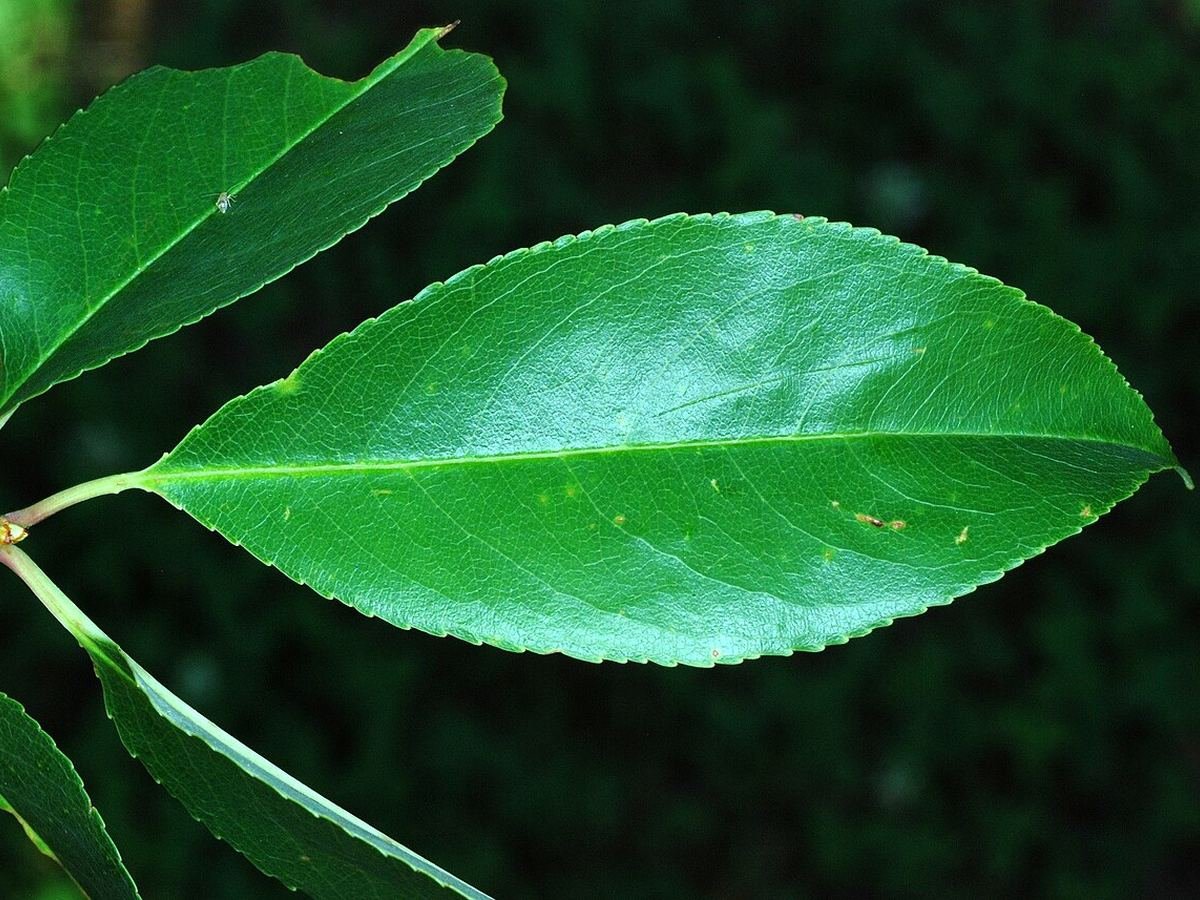
Narrow, glossy leaves with fine teeth and, on the underside, a line of rusty hairs along the lower midrib. A scratched twig smells of bitter almond. Mature bark looks like burnt potato chips. White flowers hang in finger-length strings after the leaves open, followed by pea-sized cherries that ripen from red to black.
Do not confuse it with
Carolina laurelcherry (Prunus caroliniana) is planted as a hedge all over Alabama. It is evergreen, with thick leathery leaves, and its black fruit is thin-fleshed. Its seeds and leaves are poisonous. Do not eat it. Black cherry drops its leaves in winter.
Where it grows
Birds plant black cherry everywhere, so it is common on neglected ground. It grows fast, tolerates poor soil and resents wet feet. It is not a long-lived tree.
The webs you see in the branch forks in spring belong to eastern tent caterpillars. A healthy tree usually leafs out again, and the caterpillars feed nesting birds. Leave them.
Pollination
The flowers are open and rich in nectar, and are worked by native bees, honeybees and flies. A tree needs pollen from a different black cherry. Wild trees are so common in Alabama that this is rarely a problem, but a truly isolated tree may not fruit.
Propagation
- Seed. Wash off every trace of pulp, then chill the pits in damp sand for 90 to 120 days. Sow half an inch deep in spring.
- Volunteers are easy to find under any fence where birds perch. Move them in winter while they are under two feet tall.
What you can and cannot eat
Edible
- The flesh of ripe, black fruit. It is bittersweet and winey, better cooked than raw.
Do not eat
- Pits. The kernel inside releases cyanide when it is crushed or chewed. Spit them out.
- Leaves, twigs and bark, and above all wilted leaves, which are more poisonous than fresh ones. Wilted cherry branches kill cattle, goats and horses, and the plant is dangerous to dogs. Never throw prunings into a pasture.
- Homemade bark remedies. Wild cherry bark was once used in cough syrup. The dose that helps and the dose that harms are close together. Leave it alone.
Be certain of the plant before you eat any part of it. One web page is not enough. If you are in doubt, leave it.
Using the harvest
Pick whole strings when the fruit is fully black and pulls off without resistance. To make juice, cover the cherries with water, simmer gently and mash with a potato masher, then strain through cloth. Do not put them in a blender or a press that could crack the pits.
The juice makes an excellent dark jelly and syrup. Cherry bounce, the old Southern cordial, is whole wild cherries steeped in sugar and whiskey for a few months. The pits must stay whole and uncracked.
The reddish wood is prized for furniture. The tree hosts the caterpillars of the eastern tiger swallowtail, Alabama's state butterfly, along with hundreds of moth species.
Law and permission
Steeping fruit in liquor you bought is legal at home. Distilling your own spirit from fruit is not, anywhere in the United States, without federal permits. As with any tree, the fruit belongs to the landowner.
Check it against
- Alabama Plant Atlas, for where the species is recorded in the state
- USDA PLANTS Database, for native status and range
- Alabama Cooperative Extension System, for growing advice written for Alabama soils