Black walnut
Juglans nigra Walnut family
A big, long-lived nut tree with a strong, earthy kernel inside one of the hardest shells in the woods. It poisons some of its neighbours, so where you plant it matters.
Draft. This guide was checked against Extension, USDA and poison-control sources in November 2026. It has not yet been reviewed by a botanist or, where it touches the law, an attorney, and it is hidden from search engines until it is.

Know it
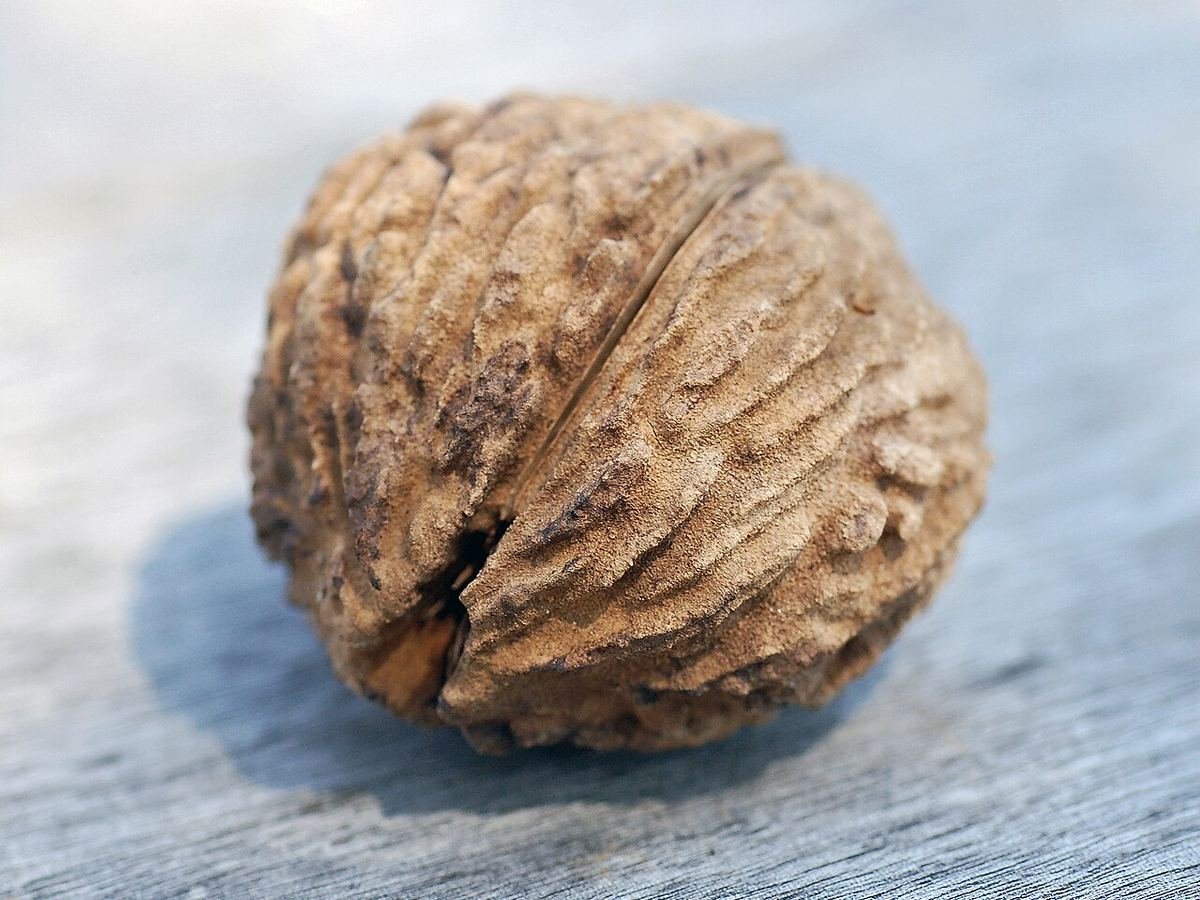
Long compound leaves with 15 to 23 pointed leaflets and a sharp, spicy smell when crushed. The end leaflet is often missing. Bark is dark and deeply furrowed in a diamond pattern. The nuts drop in autumn inside a solid green husk the size of a tennis ball that turns black and soft.
Where it grows
Black walnut wants the best soil on the site and all the sun it can get. It is a tree for the back corner of a large lot, not for a small garden.
The juglone problem
The roots, husks and leaves release a compound called juglone that stunts or kills certain plants growing within the spread of the roots, which can reach 50 feet or more from the trunk.
- Badly affected: tomatoes, peppers, potatoes, blueberries, apples and azaleas.
- Usually unbothered: pawpaw, persimmon, black cherry and elderberry. These lists come from observation, not trials, so watch new plantings.
Pollination
Male catkins and small female flowers grow on the same tree, but they often open at different times. A single tree will fruit. Two or more trees fruit more reliably.
Propagation
- Seed is the only method most people need. Remove the husk, then drop the nuts in a bucket of water and discard any that float. Plant the sinkers two inches deep in autumn where you want the tree, or keep them in damp sand in the fridge for 90 to 120 days and sow in spring.
- Cover autumn plantings with wire mesh, pegged down. Squirrels will dig up every nut otherwise.
- The seedling drives a taproot straight down. Move it in its first winter or not at all.
A tree in the open may bear a few nuts in 6 to 10 years. Heavy crops take 20 years or more.
What you can and cannot eat
Edible
- The kernel. Stronger and more bitter than a store walnut.
- Sap. It can be tapped in late winter and boiled down like maple.
Do not eat
- Husks. They are not food. The juice stains skin dark brown for weeks and can raise blisters on some people. Wear waterproof gloves and keep the juice out of your eyes.
- Mouldy husks and nuts. Black, rotting husks can grow a mould that causes tremors and seizures in dogs. Rake up fallen nuts if dogs use the site, and do not eat kernels from mouldy or rotten nuts yourself.
- Anyone with a tree nut allergy should treat this as a walnut, and that includes syrup made from the sap.
- Horses are harmed by standing on bedding with even a small share of black walnut shavings in it. Do not give the sawdust to stables.
Be certain of the plant before you eat any part of it. One web page is not enough. If you are in doubt, leave it.
Using the harvest
Gather nuts as soon as they fall, while the husk is still green or yellow. Wear rubber gloves. Roll each nut under a boot on gravel, or drive over a pile of them, to split off the husk. Wash the nuts in a bucket with a stiff brush, throw out the floaters, and cure them in a single layer in a dry, airy place away from squirrels for two to four weeks.
Crack them with a vise or a hammer on concrete. A hand nutcracker will break before the shell does. Kernels keep a year in the freezer.
The husks are worth saving. Soaked or simmered in water they give a permanent deep brown dye and ink that needs nothing added to fix it. The wood is among the most valuable in North America.
Law and permission
That value is the legal issue. Cutting or removing a walnut tree that is not yours is a crime in Alabama under the state's timber and forest products law, and the owner can sue for the value of the wood on top of that. Collecting fallen nuts needs the landowner's permission like any other harvest.
Check it against
- Alabama Plant Atlas, for where the species is recorded in the state
- USDA PLANTS Database, for native status and range
- Alabama Cooperative Extension System, for growing advice written for Alabama soils