Chickasaw plum
Prunus angustifolia Rose family
The wild plum of Alabama roadsides forms dense thickets that turn white in late February and March and drop small red and yellow plums in early to mid summer. It thrives on dry, sandy ground that little else wants.
Draft. This guide was checked against Extension, USDA and poison-control sources in November 2026. It has not yet been reviewed by a botanist or, where it touches the law, an attorney, and it is hidden from search engines until it is.

Know it
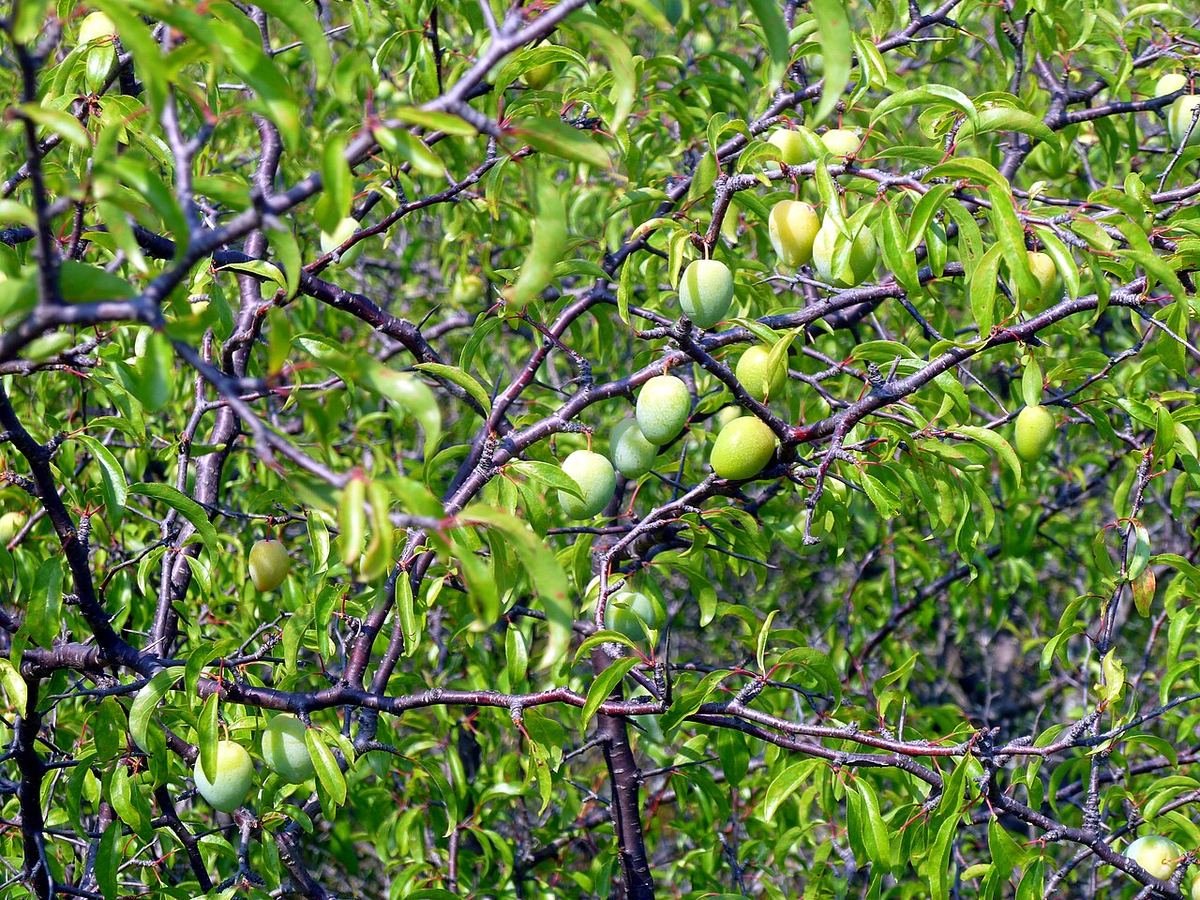
A twiggy, tangled small tree with reddish bark and short, thorn-like side branches. The leaves are narrow, glossy, and folded upward along the midrib like a trough, with tiny red-tipped teeth. Clusters of small white flowers cover the bare branches in late winter. The plums are cherry-sized, red or yellow with a thin waxy bloom.
Where it grows
Chickasaw plum spreads by root suckers into a thicket that can cover a quarter of an acre. That habit makes it excellent for a rough bank or a lot boundary, and a poor choice for a small bed. Mow around it to keep it where you want it.
The thicket is dense, thorny cover for nesting birds and rabbits, and one of the first nectar sources of the year for bees.
Pollination
Bees do the work. A plum cannot always pollinate itself, and a whole thicket is often one plant. If a thicket flowers heavily and sets little fruit, plant a seedling from another source nearby.
Propagation
- Suckers are the easy method. In winter, dig a shoot with a foot of root attached, cut the top back by half and replant at once.
- Seed. Clean the pits, chill them in damp sand for 60 to 120 days and sow in spring, or sow in autumn and let winter do it. Seedlings fruit in three to four years.
What you can and cannot eat
Edible
- Ripe fruit. Sweet flesh, tart skin. Quality varies from thicket to thicket, so taste before you plant from one.
Do not eat
- Pits. The kernel releases cyanide when cracked or chewed. Strain the pits out whole after cooking. Never crack, grind or blend them.
- Leaves and twigs, above all wilted ones, which poison livestock.
Be certain of the plant before you eat any part of it. One web page is not enough. If you are in doubt, leave it.
Using the harvest
Fruit ripens over two or three weeks and drops when ready. Shake the branches onto a sheet. The plums are too small to pit by hand, so simmer them whole with a little water until they collapse, then push the pulp through a colander.
That pulp makes one of the great Southern jellies and a sharp, bright plum butter. It also makes fruit leather and country wine. Ripe plums freeze well whole.
Law and permission
A lot of Chickasaw plum grows on highway and railroad rights-of-way. Railroad land is private property and walking onto it is trespass. Road verges are public but are sprayed with herbicide on a schedule nobody posts. Plums from a thicket on land where you have the owner's permission are safer and legal.
Check it against
- Alabama Plant Atlas, for where the species is recorded in the state
- USDA PLANTS Database, for native status and range
- Alabama Cooperative Extension System, for growing advice written for Alabama soils