Blackberry and dewberry
Rubus argutus, Rubus trivialis Rose family
The most widely picked wild food in Alabama needs no introduction and almost no care. Dewberries ripen first, low on the ground. Blackberries follow on tall arching canes.
Draft. This guide was checked against Extension, USDA and poison-control sources in November 2026. It has not yet been reviewed by a botanist or, where it touches the law, an attorney, and it is hidden from search engines until it is.

Know it
Both have thorny stems, leaves of three or five toothed leaflets, and white five-petalled flowers.
- Southern dewberry (Rubus trivialis) trails across the ground and roots where the tips touch. Its stems are slender and bristly red. It fruits in April and May.
- Sawtooth blackberry (Rubus argutus) grows upright, ridged canes that arch over at head height. It fruits from late May into July.
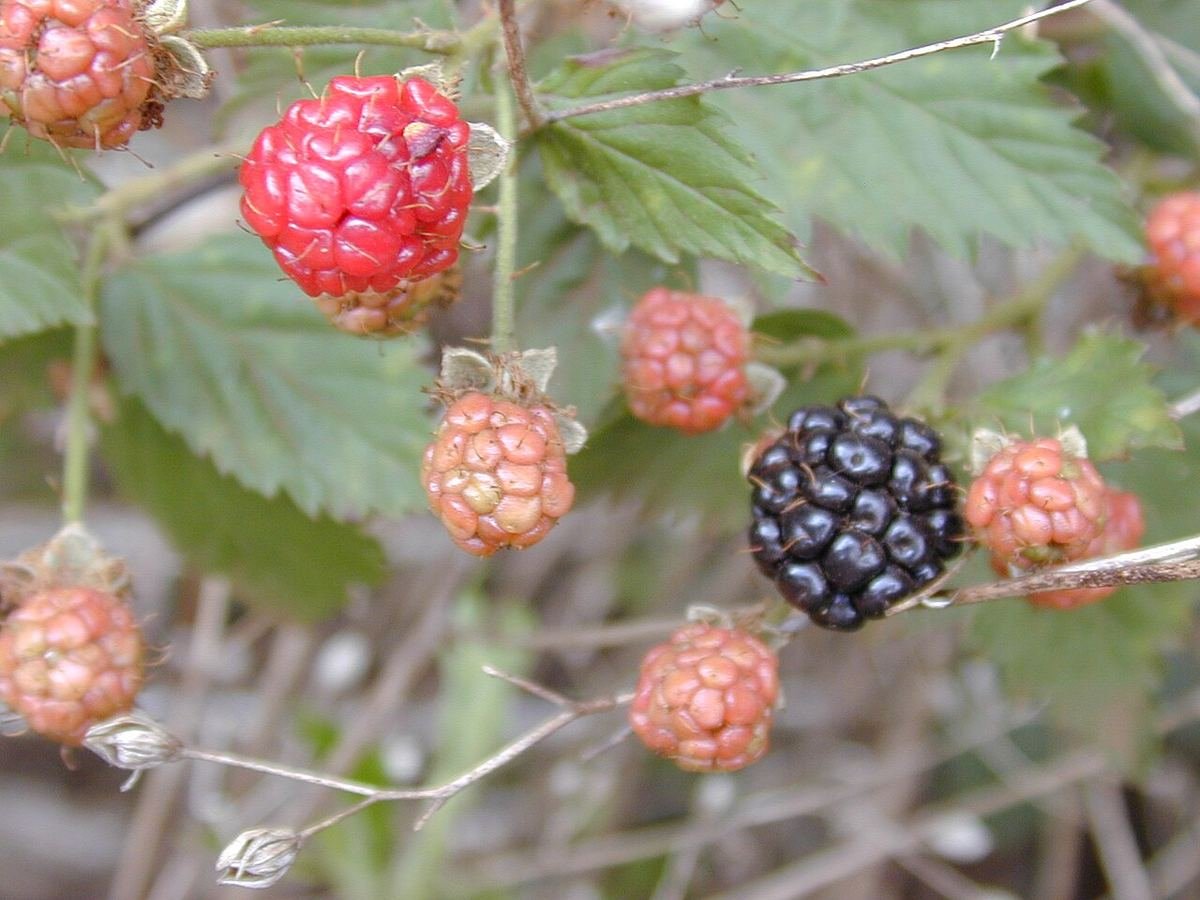
A blackberry is a cluster of many small juicy beads, each with a seed. No poisonous plant in Alabama makes a fruit of that shape on a thorny cane. That makes this the safest wild fruit for a beginner or a child to learn.
Where it grows
Brambles colonise any sunny, disturbed ground. The roots live for many years. Each cane lives for two: it grows leaves the first year, flowers and fruits the second, then dies.
In a planting, give them a strip you can mow on both sides. Each winter, cut the dead, grey canes that fruited last summer at ground level. That is all the pruning they need.
Pollination
Honeybees, bumblebees and many small native bees work the flowers, and bramble blossom is an important spring nectar source. The plants are self-fertile.
Propagation
- Tip layering. In late summer, bury the tip of a new cane three inches deep. It roots by winter and can be cut free and moved.
- Suckers. Dig young shoots with a piece of root in winter.
- Root cuttings. Four-inch pieces of root, planted flat and shallow in late winter, each make a plant.
What you can and cannot eat
Edible
- Ripe fruit. A ripe berry is dull black, not shiny, and pulls off without a tug.
- Young shoots. By tradition, the tender tips of new canes are peeled in spring and eaten raw or cooked.
- Leaves, thoroughly dried, are a traditional tea.
Do not eat
- Nothing on the plant is poisonous. The hazards are around it.
- Sprayed canes. Brambles on road verges, power line cuts and railway land are routinely treated with herbicide. Twisted, yellowing or browning leaves are a sign. Do not eat from them.
- Thorns, chiggers, ticks and snakes. Wear long trousers and closed shoes, and look before you reach.
Be certain of the plant before you eat any part of it. One web page is not enough. If you are in doubt, leave it.
Using the harvest
Pick into shallow containers so the fruit at the bottom is not crushed. Berries keep two or three days in the fridge, unwashed. Freeze them in a single layer on a tray.
Cobbler, jam, jelly and syrup are the standards. Blackberry shrub, a syrup of fruit, sugar and vinegar diluted with cold water, is an old Southern drink worth reviving. To remove the seeds, cook the fruit briefly and push it through a sieve.
Law and permission
Wild blackberries are the plant most people have in mind when they ask whether foraging is legal. Railroad corridors are private property and entering them is trespass. Alabama State Parks do not permit picking. Little River Canyon National Preserve allows a gallon of blackberries per family per day. On private land you need the owner's consent, and it is wise to get it in writing if you plan to come back.
Check it against
- Alabama Plant Atlas, for where the species is recorded in the state
- USDA PLANTS Database, for native status and range
- Alabama Cooperative Extension System, for growing advice written for Alabama soils