Groundnut
Apios americana Pea family
A climbing bean with chains of starchy tubers underground, groundnut was a staple food across eastern North America. It has about three times the protein of a potato and must be cooked.
Draft. This guide was checked against Extension, USDA and poison-control sources in November 2026. It has not yet been reviewed by a botanist or, where it touches the law, an attorney, and it is hidden from search engines until it is.

Know it
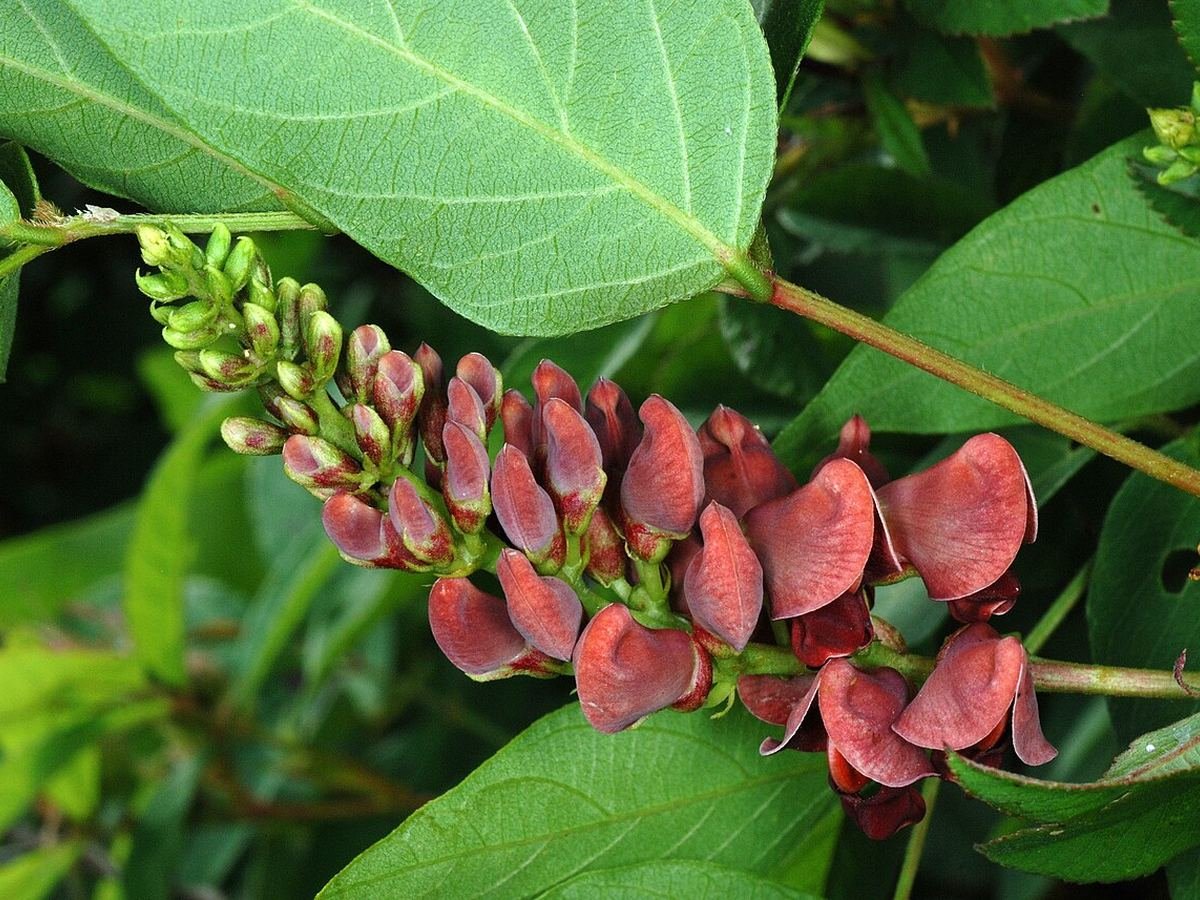
A slender vine that twines around its support, with leaves of five or seven smooth, pointed leaflets. In late summer it carries dense, short clusters of pea-type flowers in an unusual maroon and brownish pink, with a sweet scent. Underground, the roots swell at intervals into tubers from the size of a marble to the size of an egg, strung together like beads on a cord.
Wisteria is a woody vine with a thick, permanent trunk, leaves of seven to fifteen leaflets, and no tubers. All parts of it are poisonous, the seeds and pods most of all. Leaflet count alone will not separate the two. Groundnut dies to the ground each winter and has strings of tubers. Dig before you decide.
Where it grows
Groundnut scrambles over shrubs beside water. In a planting it needs a trellis, a fence or a few tall stakes, and soil that never fully dries. Like other legumes it gathers its own nitrogen from the air, so it needs no fertiliser and improves the ground for its neighbours.
It spreads. Grow it in a raised bed or a bounded strip unless you want it everywhere.
Pollination
Bees have to force the flower open to reach the nectar. Plants in the South are fertile and form slim bean pods in autumn. Plants from the far north are often sterile and spread only by tuber.
Propagation
- Tubers. Plant whole tubers two to three inches deep in late winter or spring, a foot apart. Every tuber sprouts. This is how nearly everyone grows it.
- Seed. Nick the seed coat, soak overnight and sow warm. Seedlings take an extra year to reach eating size.
Tubers can be dug after one year, but they grow much larger in their second season.
What you can and cannot eat
Edible
- Tubers, cooked. Boiled, roasted or fried, they taste like a dry, nutty potato.
- Seeds, cooked, like small dried beans.
Do not eat
- Raw tubers. They contain protease inhibitors, which interfere with digesting protein and are destroyed by heat. Always cook them through.
- A warning even when cooked. A small share of people have reported vomiting and cramps after eating cooked groundnut, sometimes after having eaten it before without trouble. Eat a small portion the first few times and wait a day.
- Legume allergies. As a precaution, anyone allergic to peanuts or soy should be cautious.
Be certain of the plant before you eat any part of it. One web page is not enough. If you are in doubt, leave it.
Using the harvest
Dig from late autumn, after the vine dies back, until growth restarts in spring. Follow a string of tubers by hand and take the large ones, replanting the small. They keep for months in damp sand in a cool place, and shrivel quickly if left in the open.
The skin oozes a sticky latex when cut raw. Boil the tubers whole in their skins for 20 to 30 minutes, then peel them. From there, slice and fry them, mash them, or add them to stew. They are denser than potato and need more liquid.
Law and permission
Digging is where foraging law is strictest. Taking fruit is one thing. Removing a plant, root and all, from land that is not yours is prohibited outright in Alabama's state parks, wildlife management areas and city parks, and on private land it is taking property. Grow your own from a few bought or gifted tubers.
Check it against
- Alabama Plant Atlas, for where the species is recorded in the state
- USDA PLANTS Database, for native status and range
- Alabama Cooperative Extension System, for growing advice written for Alabama soils