Downy serviceberry
Amelanchier arborea Rose family
A small, well-behaved tree with white flowers in March and sweet purple fruit by early summer. It fits under power lines and beside buildings where a larger tree cannot go.
Draft. This guide was checked against Extension, USDA and poison-control sources in November 2026. It has not yet been reviewed by a botanist or, where it touches the law, an attorney, and it is hidden from search engines until it is.

Know it
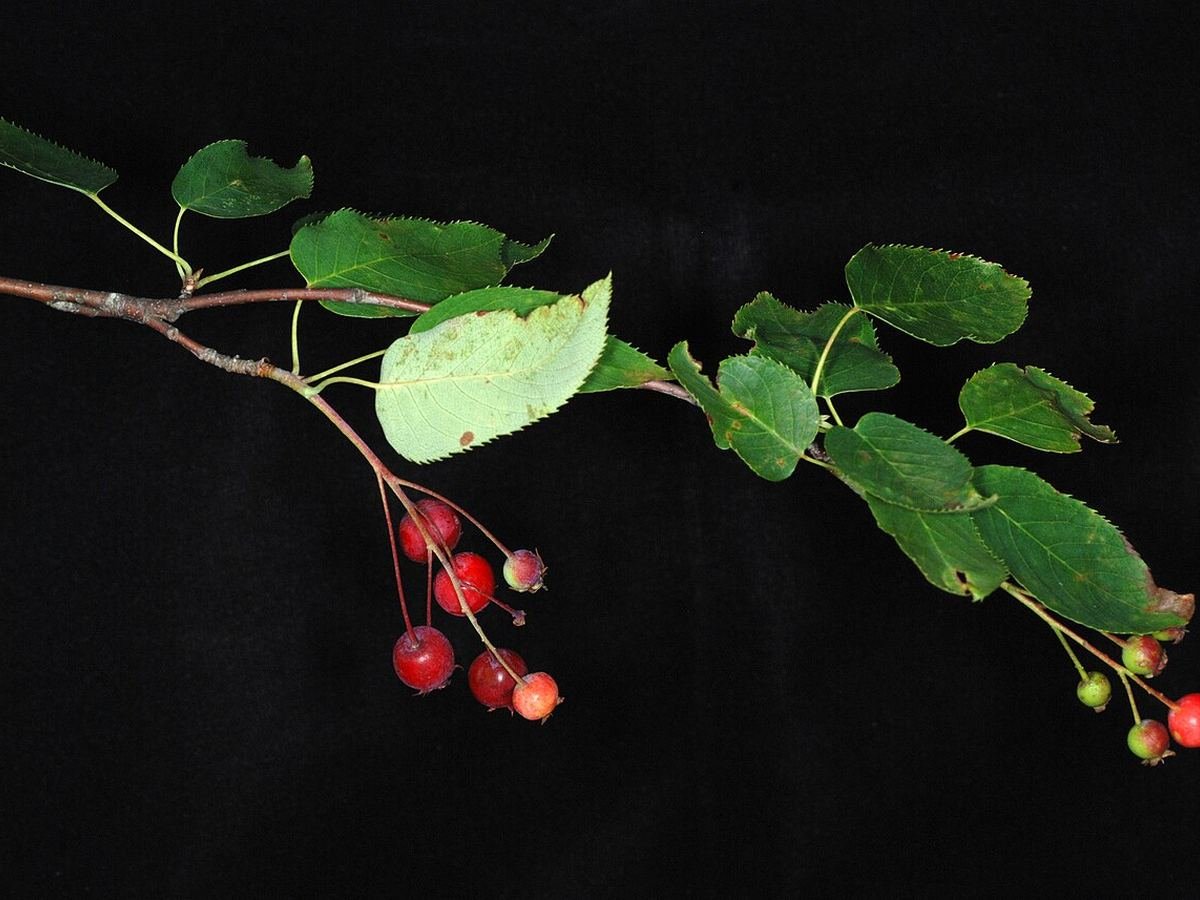
Smooth grey bark with darker vertical streaks on young trunks, like a muscle under skin, becoming furrowed with age. Clouds of narrow-petalled white flowers open before or with the leaves, among the first tree blossom of the year. Young leaves are covered in soft down, which gives the tree its name. The fruit looks like a small blueberry with a crown on the end, ripening from red to dark purple.
Where it grows
In the wild it sits at the woodland edge and on rocky slopes. In a planting it is one of the easiest native fruit trees to place: small, tidy, and good in every season, with orange and red leaves in autumn. Water it through its first two summers.
Pollination
The flowers open early, when few insects are flying, and are worked by mining bees and other small native bees. Serviceberry will set fruit alone. A cold, wet week during bloom means a light crop that year.
Propagation
- Seed. Clean the seeds from ripe fruit and do not let them dry. Chill them in damp sand for 90 to 120 days. Some will wait a second year to sprout, so keep the pot.
- Suckers. Many trees throw shoots from the base. Dig and move them in winter.
- Softwood cuttings taken in late spring will sometimes root under a humidity cover. Success is low.
What you can and cannot eat
Edible
- Ripe fruit. It tastes like a mild blueberry with a hint of almond, which comes from the soft seeds.
Do not eat
- Leaves and twigs. Like others in the rose family, they contain compounds that release cyanide. They are a hazard to browsing livestock, not to someone eating the fruit.
- Seeds in bulk. The seeds are eaten with the fruit and are harmless in normal amounts. Do not grind large quantities of seed.
- Rust-infected fruit. Berries covered in orange spikes or powder have cedar rust. Pick them off and throw them away. The disease moves between serviceberry and red cedar, so do not plant the two side by side.
Be certain of the plant before you eat any part of it. One web page is not enough. If you are in doubt, leave it.
Using the harvest
The birds know the day the fruit ripens. If you want a share, pick as soon as the berries turn dark red and let them finish colouring indoors, or net a branch or two.
Use them exactly as you would blueberries: fresh, in pies and muffins, as jam, or frozen on a tray. They also dry well into something like a currant, and Native peoples dried serviceberries and mixed them with other foods.
Law and permission
Serviceberry is widely planted along streets and in office landscaping, where nobody picks it. Street trees usually belong to the city and landscaping belongs to the property owner. A polite question nearly always gets a yes.
Check it against
- Alabama Plant Atlas, for where the species is recorded in the state
- USDA PLANTS Database, for native status and range
- Alabama Cooperative Extension System, for growing advice written for Alabama soils