Rabbiteye blueberry
Vaccinium virgatum Heath family
The blueberry that evolved in the heat of south Alabama and Georgia. Give it acid soil and a partner and it will fruit for many years with little care.
Draft. This guide was checked against Extension, USDA and poison-control sources in November 2026. It has not yet been reviewed by a botanist or, where it touches the law, an attorney, and it is hidden from search engines until it is.

Know it
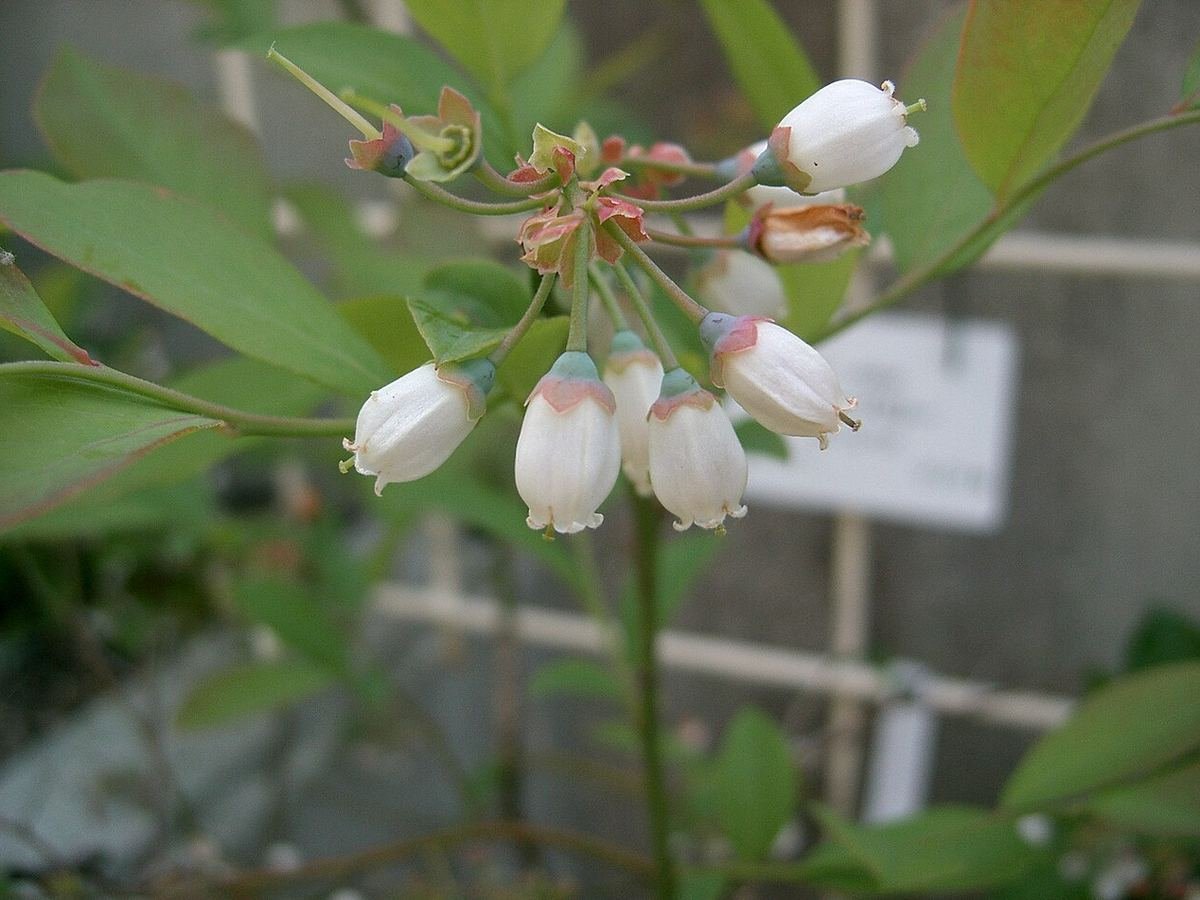
A tall, many-stemmed shrub with small oval leaves that turn red in autumn. White to pink bell-shaped flowers hang in clusters in early spring. The name comes from the unripe berry, which turns pink like the eye of a white rabbit before it goes blue.
How to be sure it is a blueberry
Every true blueberry has a five-pointed crown on the end opposite the stem. The blue-black berries of Chinese privet, which grows wild all over Birmingham, have no crown and are poisonous. Neither do the berries of nightshade, pokeweed or Virginia creeper. No crown, no eating. The crown only rules a berry in as a possible blueberry. It does not prove it is one, so check the bush as well: a woody shrub with small oval leaves and bell-shaped flowers.
Where it grows
Soil acidity decides everything. Most Birmingham soil is not acid enough, and a blueberry in the wrong soil turns yellow and stalls. Test before you plant. The Auburn University soil lab runs tests through county Extension offices for a small fee. Lower the pH with elemental sulfur several months ahead, and dig plenty of pine bark into the planting area.
Plant at the same depth as in the pot, never deeper. Mulch three to four inches deep with pine bark or pine straw, and water deeply once or twice a week in the first year. Never plant near a black walnut.
Pollination
Rabbiteye flowers cannot be fertilised by their own variety. Plant at least two varieties that bloom together, such as an early pair or a late pair.
The best pollinator is the southeastern blueberry bee, a small native bee that flies only in early spring. It shakes the pollen out of the flower by buzzing, which honeybees cannot do. Bumblebees do the same. Leave some bare, undisturbed ground nearby for these bees to nest in, and do not spray during bloom.
Propagation
- Softwood cuttings. In late spring, take four-inch tips of new growth, strip the lower leaves and root them in a mix of peat and perlite under a clear cover in the shade.
- Suckers. Rabbiteyes send up shoots a foot or two from the crown. Sever and move them in winter.
- Seed does not come true and takes years. Do not bother.
What you can and cannot eat
Edible
- The berries. Leave them on the bush for a week after they turn blue. They sweeten a great deal in that time.
Do not eat
- Nothing on a blueberry bush is dangerous. The risk is in picking a lookalike. See the crown test above.
Be certain of the plant before you eat any part of it. One web page is not enough. If you are in doubt, leave it.
Using the harvest
A mature bush can give 10 pounds or more over about six weeks. Pick every few days. Freeze the berries unwashed in a single layer on a tray, then bag them, and rinse just before use. They also dry well and make good jam. Follow a tested recipe.
Prune in late winter by removing a few of the oldest canes at the ground each year.
Law and permission
Dried fruit and jam are both covered by Alabama's cottage food law, so home-made blueberry products can be sold directly to customers once you have taken the required course. Wild blueberries may be picked at Little River Canyon National Preserve, up to a gallon per family per day. They may not be picked in Alabama State Parks.
Check it against
- Alabama Plant Atlas, for where the species is recorded in the state
- USDA PLANTS Database, for native status and range
- Alabama Cooperative Extension System, for growing advice written for Alabama soils