Maypop
Passiflora incarnata Passionflower family
Alabama's native passionfruit has one of the most elaborate flowers in North America and an egg-sized fruit full of sweet-tart pulp. It dies to the ground each winter and comes back wherever it likes.
Draft. This guide was checked against Extension, USDA and poison-control sources in November 2026. It has not yet been reviewed by a botanist or, where it touches the law, an attorney, and it is hidden from search engines until it is.

Know it
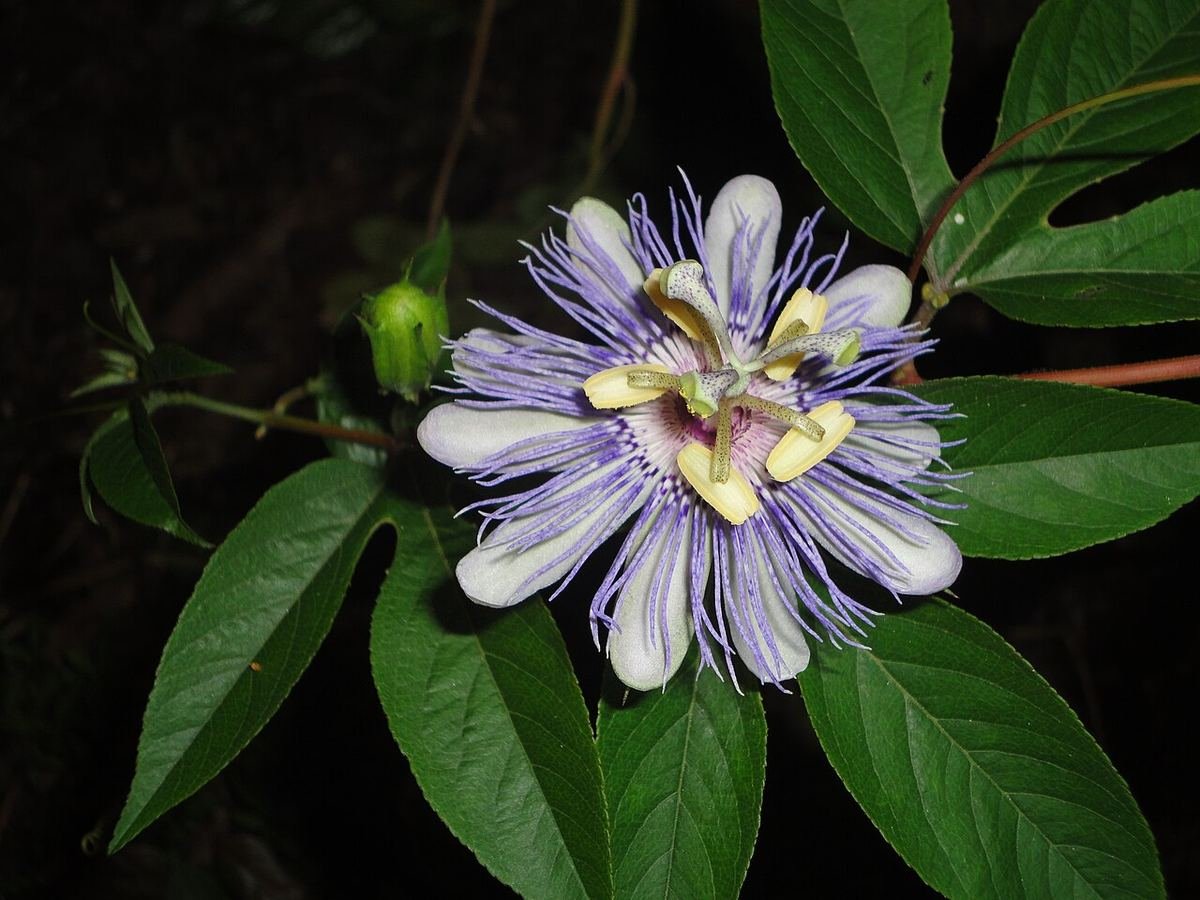
Three-lobed leaves with fine teeth, climbing by tendrils. The flower is three inches across, with a fringe of crimped lavender and white threads under a raised centre. The fruit is the size and shape of a hen's egg, green and smooth, turning yellowish and wrinkled as it ripens. Step on a hollow one and it pops, which is one explanation for the name.
Yellow passionflower (Passiflora lutea) is a smaller native relative with tiny flowers and pea-sized black fruit. It is not worth eating.
Where it grows
Maypop comes up late, often not until May, then grows at great speed. It travels underground and sends up shoots many feet from where you planted it. Put it on a fence at the edge of a site, or somewhere bounded by mowing or pavement. Do not put it in a bed with anything delicate.
It is the host plant of the Gulf fritillary, the bright orange butterfly of late summer. The spiny orange caterpillars can strip a vine. The vine recovers. Leave them.
Pollination
The flower is built for large bees. Carpenter bees and other large bees brush against the pollen as they circle for nectar. A vine will rarely set fruit with its own pollen, and a patch that spread from one root is one plant. For fruit, grow two vines from different sources, or move pollen between them yourself with a fingertip.
Propagation
- Root suckers. In late spring, dig a shoot with a few inches of root and replant it. This is the easiest method by far.
- Seed. Clean the pulp off, nick or sand the seed coat, and soak for a day before sowing warm. Germination is slow and scattered over months.
- Softwood cuttings root readily in early summer.
What you can and cannot eat
Edible
- Ripe pulp. The juicy sacs around the seeds are sweet, sour and perfumed.
- Flowers, as a garnish.
Do not eat
- Unripe fruit. Do not eat hard green fruit. Wait until it yellows and drops.
- Leaves, stems and roots. NC State Extension lists the leaves and stems as poisonous. They can cause severe nausea, vomiting, drowsiness and an irregular heartbeat. Passionflower leaf is also sold as a herbal sedative. It should not be used in pregnancy, because it may bring on contractions, or in the two weeks before surgery, and it can cause drowsiness, dizziness and confusion. We do not recommend home preparations. Keep children and pets from chewing the vine.
Be certain of the plant before you eat any part of it. One web page is not enough. If you are in doubt, leave it.
Using the harvest
The fruit is ripe when it turns from deep green to yellow-green, feels light and slightly soft, and drops from the vine. Collect from the ground. Cut one open: ripe pulp is yellowish and fragrant, unripe pulp is white and dry.
Eat it with a spoon, seeds and all, or warm the pulp gently and press it through a sieve for juice. The juice makes jelly, syrup and a very good addition to lemonade and iced tea.
Law and permission
Maypop grows on a great many fences that belong to somebody. Ask before picking. If you sell maypop jelly, describe it as food. Any claim that a product calms, sedates or helps sleep makes it an unapproved drug in the eyes of the FDA.
Check it against
- Alabama Plant Atlas, for where the species is recorded in the state
- USDA PLANTS Database, for native status and range
- Alabama Cooperative Extension System, for growing advice written for Alabama soils