Mayhaw
Crataegus aestivalis, Crataegus opaca Rose family
A thorny swamp hawthorn from south Alabama whose tart red fruit makes the most prized jelly in the Deep South. It grows perfectly well on dry ground if you water it.
Draft. This guide was checked against Extension, USDA and poison-control sources in November 2026. It has not yet been reviewed by a botanist or, where it touches the law, an attorney, and it is hidden from search engines until it is.

Know it
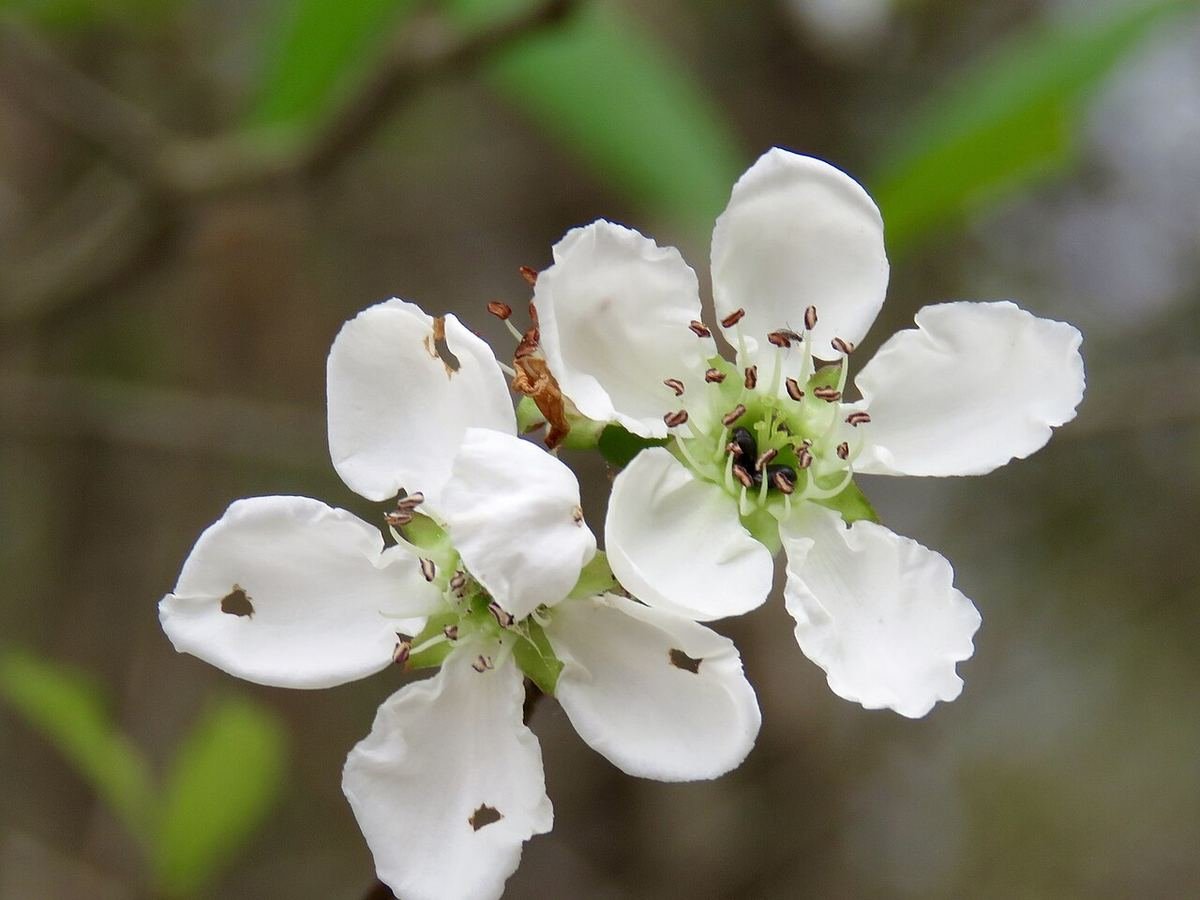
A small tree with grey, flaking bark, sharp, straight thorns and small glossy leaves. White five-petalled flowers open very early, in late winter. The fruit is a miniature crabapple, half an inch to three quarters of an inch across, yellow to bright red, ripening in late April and May. That timing is the name: the haw that ripens in May.
Eastern mayhaw (Crataegus aestivalis) is the species of southeast Alabama. Western mayhaw (Crataegus opaca) grows in the southwest corner of the state.
Where it grows
Wild mayhaws stand in shallow water for part of the year, but they do not need to. On ordinary garden soil in full sun they grow faster and fruit more heavily, as long as they are watered in dry spells. Most trees sold today are named selections chosen for large fruit.
Because it flowers in February, a late frost can take the whole crop. Avoid frost pockets at the bottom of a slope.
Pollination
Honeybees and native bees work the flowers. Many mayhaws will set some fruit alone, but two different trees flowering together usually carry more.
Propagation
- Seed. Sow cleaned seed fresh, or keep it in damp sand in the fridge until the following spring. Germination is slow and uneven. Many seedlings come close to the parent.
- Grafting is how named varieties are made, on mayhaw seedlings or on other hawthorns such as parsley haw.
- Softwood cuttings in early summer root reasonably well under mist.
What you can and cannot eat
Edible
- The fruit. It is sour and a little bitter raw. Almost all of it is cooked.
Do not eat
- Seeds. Hawthorn seeds are reported to contain small amounts of cyanide-releasing compounds, like apple seeds. Strain them out. Do not grind whole fruit.
- Thorns. A hawthorn puncture can become badly infected. Wear gloves and eye protection when pruning.
- People taking heart medication should talk to a doctor before eating hawthorn products regularly, because hawthorn can add to the effect of some of those drugs.
Be certain of the plant before you eat any part of it. One web page is not enough. If you are in doubt, leave it.
Using the harvest
The traditional harvest was by boat: the fruit drops into the swamp water, floats, and is scooped up with a net. On dry land, spread tarps and shake the tree. Fruit freezes well whole, so you can collect over two weeks and cook once.
To make juice, cover a gallon of fruit with three quarts of water, simmer gently for about half an hour, press lightly and strain through cloth. For jelly, follow the tested mayhaw jelly recipe from the National Center for Home Food Preservation, which adds powdered pectin. It sets clear and coral-red, with a flavour somewhere between apple and wild plum. It also makes syrup and wine.
Law and permission
Mayhaw jelly is exactly the kind of product Alabama's cottage food law was written for. You can make it at home and sell it directly to customers after taking an approved food safety course and labelling the jars as the law requires. Wild mayhaw ponds are private land or protected wetland. Get permission before you wade in.
Check it against
- Alabama Plant Atlas, for where the species is recorded in the state
- USDA PLANTS Database, for native status and range
- Alabama Cooperative Extension System, for growing advice written for Alabama soils