Pawpaw
Asimina triloba Custard apple family
The largest fruit native to North America grows in the shade of Alabama creek bottoms and tastes like banana custard. It needs a partner tree and a little help from flies.
Draft. This guide was checked against Extension, USDA and poison-control sources in November 2026. It has not yet been reviewed by a botanist or, where it touches the law, an attorney, and it is hidden from search engines until it is.

Know it
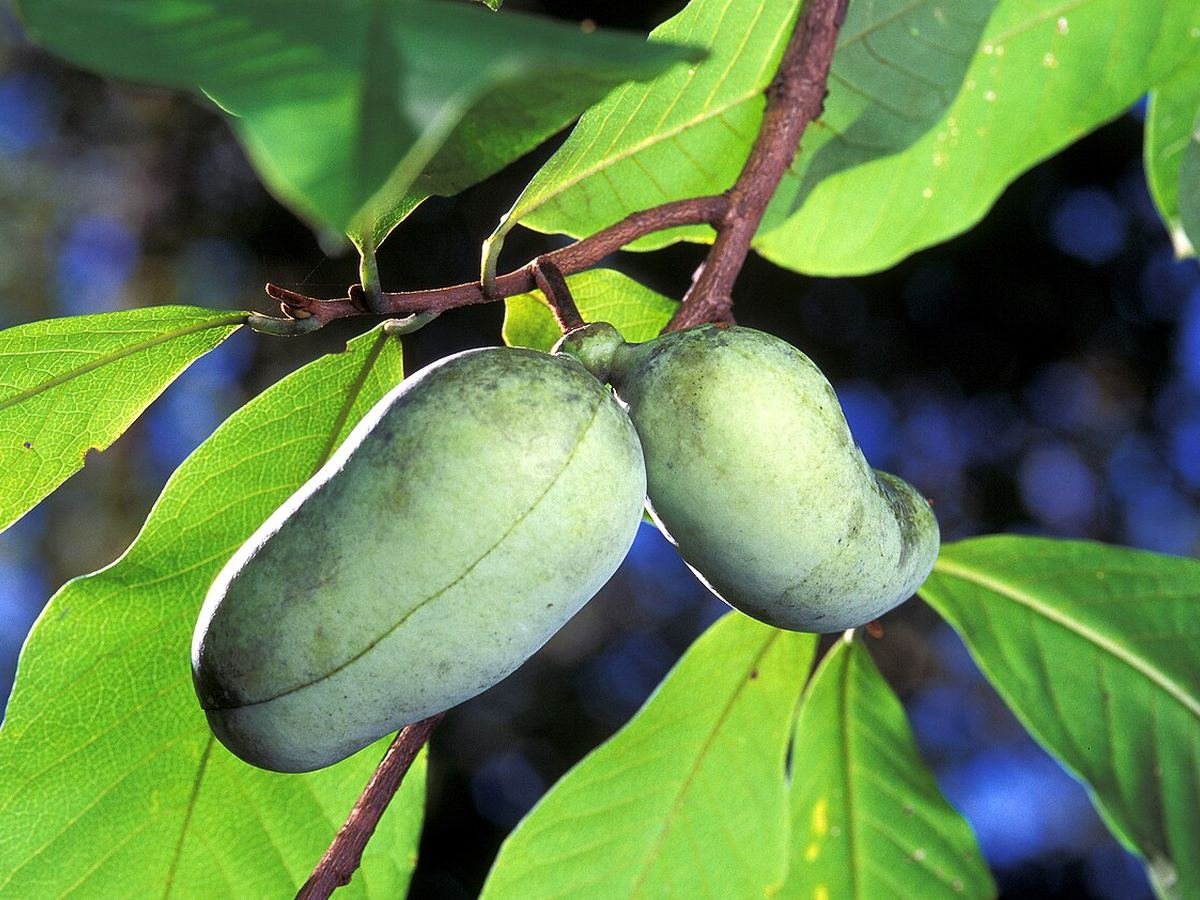
Large, drooping leaves up to a foot long, widest past the middle, that smell like green pepper when crushed. Maroon, downward-facing flowers appear on bare wood in early spring. The fruit is green, kidney-shaped, three to six inches long, and hangs in clusters like a short hand of bananas.
Its smaller cousin, small-flower pawpaw (Asimina parviflora), grows across the state, often in drier woods. The fruit is edible but small, one to three inches long.
Where it grows
Pawpaw is a tree of the forest floor. In the wild it sits under taller hardwoods on moist slopes and along creeks. A seedling in full sun will scorch, so shade it for its first two summers, then let it have light. A tree in sun carries far more fruit than one in deep shade.
Give it soil that holds water without going sour. Mulch heavily and water through the first two Augusts.
Pollination
This is where most plantings fail. The flowers smell faintly of yeast and rot because they are built to attract flies and beetles, not bees. Those insects are unreliable workers.
- A tree will not usually pollinate itself. A patch that grew from one set of roots is one plant, so it will flower for years and set nothing.
- Plant at least two trees grown from different seed or two different named varieties, planted close together.
- To be sure of a crop, pollinate by hand. Use a small, soft paintbrush to collect loose pollen from an older flower on one tree, one whose centre has turned brown and crumbly, and dab it onto the glossy green centre of a younger flower on the other.
Propagation
- Seed is the practical route. Clean the seeds and never let them dry out, because a dried pawpaw seed is dead. Store them in damp sphagnum in the fridge for 70 to 100 days, then sow an inch deep in a tall pot. The root comes first and the shoot follows about two months later.
- Root suckers look like free plants but rarely survive being dug.
- Grafting onto seedlings is how named varieties are made. Whip and chip grafts both take well in spring.
Expect fruit five to eight years after sowing.
What you can and cannot eat
Edible
- The ripe flesh. It is ready when the fruit gives like a ripe peach and comes away with a gentle tug or drops on its own.
- Eat it fresh or freeze the pulp.
Do not eat
- Seeds and skin. Both contain compounds that cause vomiting. Spit the seeds, do not blend them.
- Underripe fruit. Hard or green-tasting fruit causes stomach upset.
- Leaves, twigs and bark.
- Cooked or dried pawpaw in quantity. Some people report nausea and vomiting after eating dried or baked pawpaw, even when fresh fruit agrees with them. Fresh and frozen ripe pulp, eaten in moderation, gives the fewest problems.
- Pawpaw every day. The fruit contains natural compounds (acetogenins) that have been linked to nerve disease where related fruits are eaten daily. Treat it as a seasonal food, not a daily one.
- A minority of people react to the fruit itself with nausea or hives. Try a few spoonfuls the first time. Handling the skin gives some people a rash, so wear gloves to pick if you are sensitive.
Be certain of the plant before you eat any part of it. One web page is not enough. If you are in doubt, leave it.
Using the harvest
Ripe pawpaws bruise at a touch and last two or three days on the counter, about a week in the fridge. That is why you never see them in a grocery store. Halve the fruit, scoop the flesh, push it through a colander to remove the seeds and freeze it in measured bags. Use it wherever you would use mashed banana, and in ice cream, where it is at its best.
Pawpaws are the only host plants for the zebra swallowtail butterfly. Chewed leaves are the point, not a problem.
Law and permission
Pawpaw patches on creek banks nearly always belong to someone. Get permission before you pick. Frozen pulp is a perishable processed food, so it is not something you can sell from a home kitchen under Alabama's cottage food rules. Give it away or sell the whole fresh fruit instead.
Check it against
- Alabama Plant Atlas, for where the species is recorded in the state
- USDA PLANTS Database, for native status and range
- Alabama Cooperative Extension System, for growing advice written for Alabama soils