Red mulberry
Morus rubra Mulberry family
Alabama's native mulberry ripens in late spring, among the first tree fruits of the year. It is losing ground to an imported cousin, so planting the real thing matters.
Draft. This guide was checked against Extension, USDA and poison-control sources in November 2026. It has not yet been reviewed by a botanist or, where it touches the law, an attorney, and it is hidden from search engines until it is.

Know it
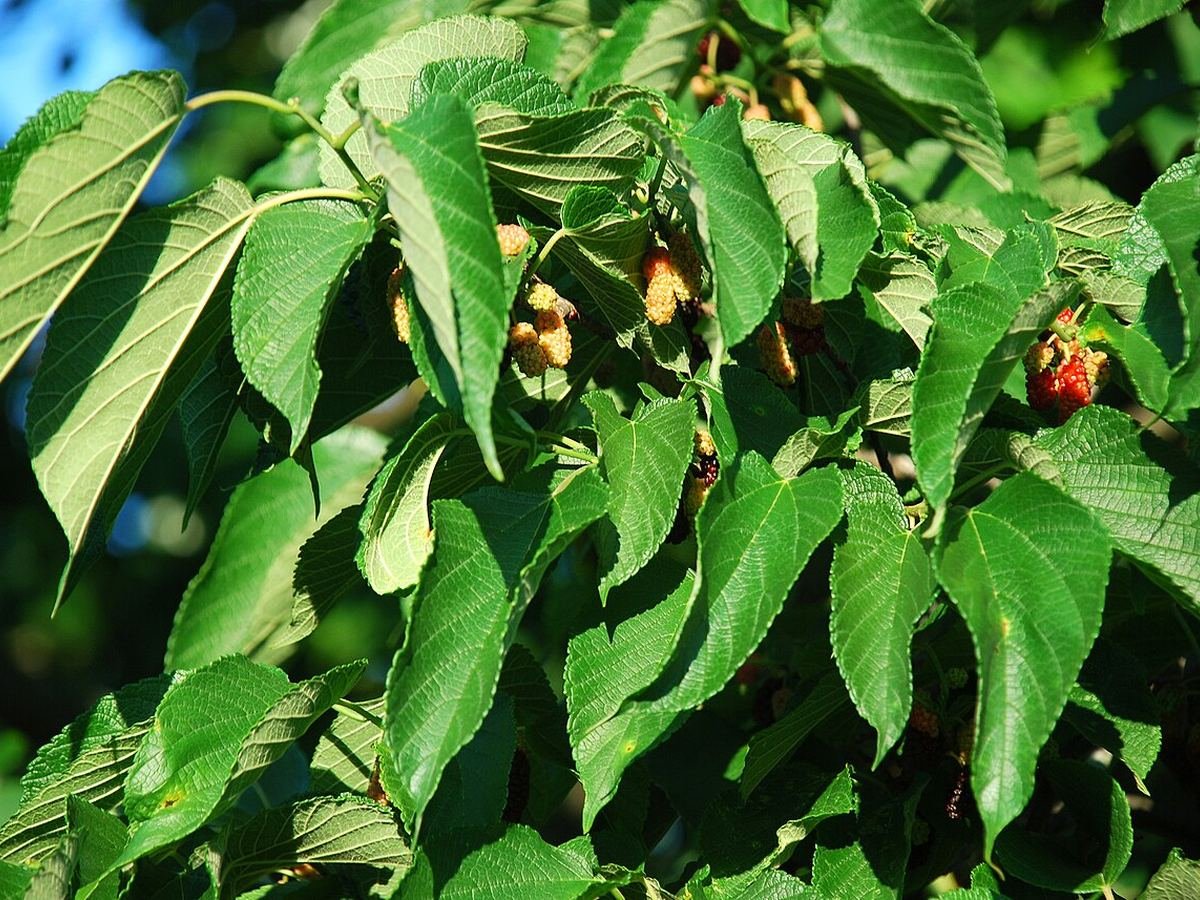
The leaves are large, three to eight inches, heart-shaped and sometimes lobed like a mitten. The test is to rub one. A red mulberry leaf is dull and rough like fine sandpaper on top and softly hairy underneath. The fruit looks like a long blackberry, turning from green to red to deep purple-black.
The cousin to avoid planting
White mulberry (Morus alba) was brought from Asia for silk farming and now grows wild all over Birmingham. Its leaves are smaller, glossy and smooth on top. Its fruit is edible too, so confusing the two will not hurt you. The harm is to the native tree, because the two species cross freely and the hybrids are replacing pure red mulberry. Buy from a nursery that can tell you where its seed came from.
Where it grows
In the wild, red mulberry is an understory tree of river bottoms and moist slopes. It grows fast when young and tolerates more shade than most fruit trees. Keep it away from sidewalks, driveways and parked cars, because the falling fruit stains everything purple for a month.
Pollination
Mulberries are wind-pollinated. The flowers are small green catkins that appear with the new leaves. Most trees are one sex or the other, so a tree that never fruits may simply be male. Plant two or three seedlings to be sure of a female, or buy a tree that has already fruited.
Propagation
- Seed. Mash ripe fruit in water, pour off the pulp and keep the seeds that sink. Sow at once on the surface of moist potting mix, or chill them damp for 30 to 90 days first.
- Cuttings. Red mulberry roots less willingly than white. Try softwood cuttings in early summer with rooting hormone and expect some failures.
What you can and cannot eat
Edible
- Ripe fruit, when it is fully dark and falls at a touch.
Do not eat
- Unripe fruit. White, green or hard red berries cause stomach upset and can affect the nervous system. Hallucinations are reported.
- Milky sap in the leaves, stems and unripe fruit. It causes the same symptoms if eaten, and a skin rash in some people.
Be certain of the plant before you eat any part of it. One web page is not enough. If you are in doubt, leave it.
Using the harvest
Spread an old sheet under the tree and shake the branches. Ripe fruit rains down and unripe fruit stays put. Mulberries keep for only a day or two, so eat, freeze or cook them the same day. They make good pie, jam and syrup, though they are low in acid and need lemon juice to set and to taste of anything. They also dry well into something like a small fig.
The small green stem does not pull free. Leave it on. You will not notice it once the fruit is cooked.
The inner bark is strong and fibrous. Native peoples of the Southeast spun and wove it into cloth.
Law and permission
A mulberry hanging over a sidewalk is still the property of whoever owns the ground it is rooted in. Alabama follows the general rule that you may not enter land or take from a tree without the owner's consent. Knock and ask. Most people with a mulberry are glad to see someone use it.
Check it against
- Alabama Plant Atlas, for where the species is recorded in the state
- USDA PLANTS Database, for native status and range
- Alabama Cooperative Extension System, for growing advice written for Alabama soils