Pokeweed
Phytolacca americana Pokeweed family
Poke comes up on every vacant lot we work on, and every part of it is poisonous. It is here because you need to recognise it, and because poke sallet is a real Southern tradition that deserves an honest account.
Draft. This guide was checked against Extension, USDA and poison-control sources in November 2026. It has not yet been reviewed by a botanist or, where it touches the law, an attorney, and it is hidden from search engines until it is.

Know it
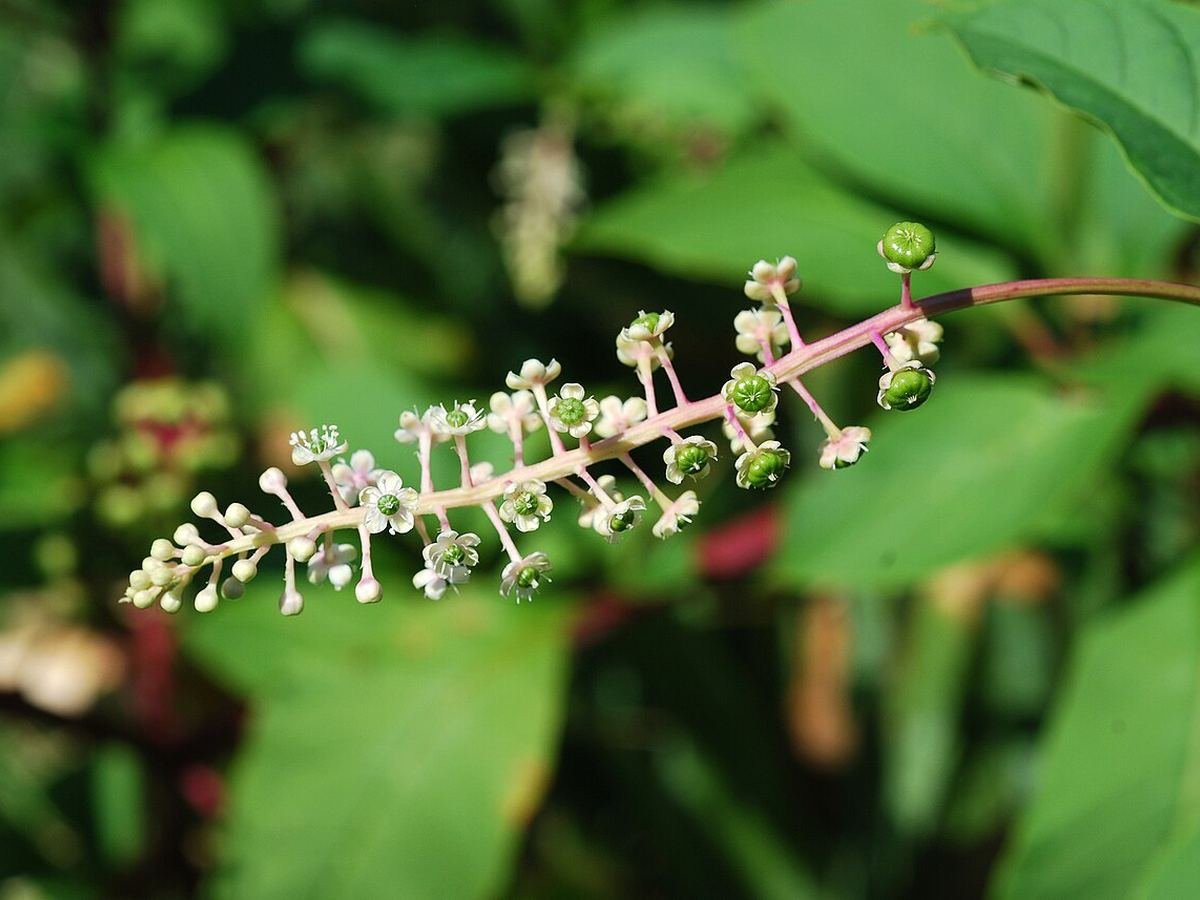
A fast, coarse plant that looks like a small tree by midsummer and dies to the ground with the first frost. The stems are smooth, hollow, and turn bright magenta as the season goes on. Leaves are large, plain and smooth-edged. Small white flowers on upright spikes become long, drooping strings of glossy purple-black berries, each one flattened like a tiny pumpkin, on hot-pink stalks. To a child the berry clusters look like grapes.
Children are drawn to the berries. If a site is used by children, cut poke down before it fruits.
Where it grows
Anywhere. Birds eat the berries and drop the seeds along every fence and under every wire. The seed lives in the soil for decades and sprouts when ground is cleared. We do not plant it. We decide, site by site, whether to remove it or leave some standing at the back for the mockingbirds, catbirds and cardinals that depend on the fruit in autumn.
To remove it, dig out the root with a spade while the plant is young. Wear gloves. Cutting alone will not kill it.
Pollination
The flowers are visited by small bees and flies and also pollinate themselves. Every plant sets seed.
Propagation
It needs no help, and we do not recommend giving it any.
What you can and cannot eat
Edible
- Nothing, in our view. We do not serve poke, teach its preparation at workshops or recommend that anyone eat it.
- The tradition. Poke sallet is the very young spring shoots and leaves, cut when the plant is under about six inches tall and shows no red, boiled in two or three changes of water with the water thrown away each time, then fried. Generations of Southerners ate it every spring. People who prepare it this way still get sick some years. The National Library of Medicine says eating it is never recommended, because there is no guarantee that even twice-boiled poke is safe.
Do not eat
- The root. It is the most poisonous part and has been mistaken for horseradish and for medicinal roots, with serious results. Never eat the root, cooked or not.
- Berries and seeds. One or two berries are unlikely to harm a child, but call Poison Help anyway.
- Mature leaves and any stem with red in it.
- Any part, raw.
Poisoning usually starts within six hours with severe vomiting, cramps and diarrhoea, sometimes bloody. Serious cases bring low blood pressure, trouble breathing and seizures, and deaths have been reported. If someone has eaten poke, call the Poison Help line on 1-800-222-1222. It is free and answered at all hours.
The juice can be absorbed through broken skin, and the sap can cause a rash on unbroken skin. Wear gloves when you pull or cut it.
Be certain of the plant before you eat any part of it. One web page is not enough. If you are in doubt, leave it.
Using the harvest
The berries give an intense magenta juice that was used as ink and as a dye for cloth. The colour is beautiful and it fades to brown in sunlight within months. Wear gloves. It is a good project for adults and a poor one for small children.
For wildlife, a standing poke plant in October is one of the most useful things on a lot.
Law and permission
The legal risk with poke is in feeding it to other people. Cooked greens are not a cottage food, so they cannot be sold from a home kitchen. Alabama's food donation law protects people who give food in good faith, but not where there is gross negligence, and serving a known poisonous plant to the public is hard to defend. Do not share it.
Check it against
- Alabama Plant Atlas, for where the species is recorded in the state
- USDA PLANTS Database, for native status and range
- Alabama Cooperative Extension System, for growing advice written for Alabama soils